
Büyüknalbant, E., Aydınbelge, M., Sarı, Ş. and Demir, P. (2025). A case–control study on the relationship between sleep bruxism and mental health conditions, depression and anxiety, in children. Scientific Reports, [online] 15(1). doi:https://doi.org/10.1038/s41598-025-21679-y.
Background:
Sleep bruxism (SB) is characterized by the involuntary grinding or clenching of teeth during sleep. This condition is observed more among children than adults, with a prevalence of 3.5-40.6%, and potential implications for dental health and overall psychological well-being.
Aims:
The primary aim of the study was to explore the associations between sleep bruxism, anxiety, depression, and various demographic factors in children aged 6-17 years old. Additionally, it evaluated how these psychological conditions may influence the occurrence of SB in different age groups and sexes.
Methodology:
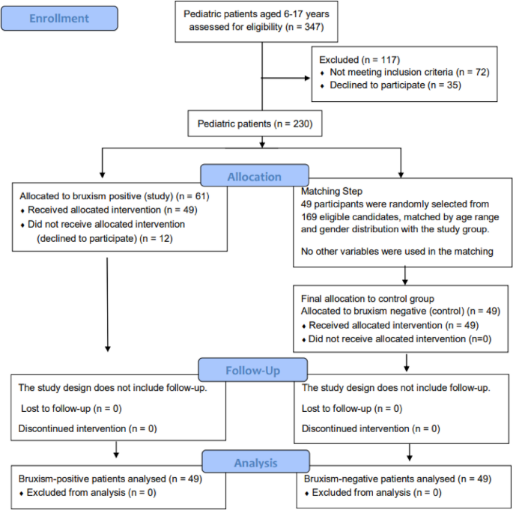
The study comprised a sample of 347 paediatric patients who were treated at the Child and Adolescent Psychiatry Clinic of Erciyes University. Out of these, 98 children participated (49 with SB and 49 control); the group compositions were balanced in terms of gender and age distributions.
A cross-sectional case-control design was employed where parents completed questionnaires on bruxism. Diagnoses were confirmed through intraoral examinations as per the American Academy of Sleep Medicine criteria and psychological evaluations were conducted utilising the Children’s Depression Inventory and the Beck Anxiety Inventory.
Results:
Statistically significant differences were noted in anxiety and depression levels between groups. Children aged 13–17 years with SB displayed higher anxiety and depression scores compared to their counterparts without SB. Female adolescents exhibited anxiety levels nearly twice as high as males within the SB group, which underscores potential gender-specific vulnerability. No significant associations were found between SB and demographic factors such as parental education, income level, or marital status. This suggests that psychological conditions might play a more pivotal role in the aetiology of SB than demographic factors.
Discussion
The study discusses the multifactorial nature of SB, indicating that anxiety and depression may interact with physiological factors to precipitate or exacerbate bruxism. While past literature has suggested connections between these conditions, this study focuses the unique paediatric perspective, revealing that older age groups may be particularly susceptible due to developmental and hormonal factors. However, although correlations were evident, the authors acknowledged the absence of definitive causation.
Conclusion
In summary, the study concluded that while no direct causal relationship was established between sleep bruxism and mental health conditions in children, the findings suggest a noteworthy link. Particularly among adolescents, increased anxiety appears to significantly elevate the risk for SB. The authors advocate for a more integrated approach within the healthcare system, encouraging collaboration between mental health professionals and dental practitioners to better address the needs of children exhibiting symptoms of anxiety, depression, and sleep bruxism. Ultimately, early recognition, detection and treatment of the interplay between psychological and dental health is crucial in promoting holistic care for children.
Research Summary Written By: Aaminah Patel, University of Manchester – BDS 2