
O’Driscoll, J. and McIntyre, G. (2026) ‘Glucagon-like peptide-1 receptor agonists: a review of
the literature from a dental perspective’, British Dental Journal, 240(3), pp. 144–148.
Available at: https://doi.org/10.1038/s41415-025-9345-4
Background
GLP-1 receptor agonists, including semaglutide (Ozempic/Wegovy) and tirzepatide
(Mounjaro), are rapidly increasing in use for the management of obesity and type 2
diabetes. While their medical benefits are well established, their effects on the oral cavity
and facial tissues are less well understood. With more patients accessing these medications,
dental professionals are increasingly likely to encounter associated complications in
practice.
Aim
This review aimed to explore the impact of GLP-1 receptor agonists on facial aesthetics and
oral health, and to highlight why these drugs are becoming increasingly relevant to dental
care.
Methods
A narrative review of the literature was carried out using multiple databases, including
PubMed, Medline and Scopus. Due to the limited number and quality of available studies,
the authors opted for a narrative approach, highlighting the current lack of robust dental
evidence.
Results
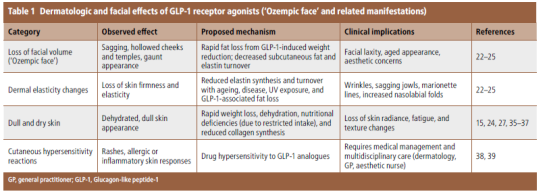
Several notable facial and oral effects were identified. “Ozempic face” describes the loss of
facial volume and skin elasticity associated with rapid weight loss, often resulting in a more
aged appearance. This has led to increasing demand for aesthetic treatments, some of
which may present within dental settings.
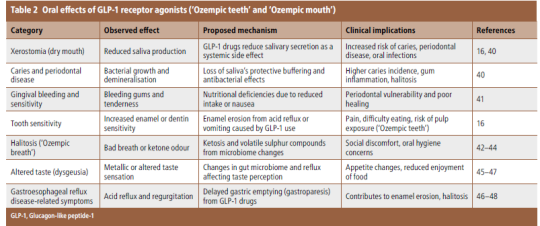
From a dental perspective, oral side effects are particularly significant. Xerostomia was
reported, increasing the risk of caries, periodontal disease and halitosis due to reduced
salivary protection. Patients may also present with gingival bleeding and delayed healing,
likely linked to nutritional deficiencies. Additionally, enamel erosion and tooth sensitivity
can occur as a result of acid reflux and vomiting, while altered taste and halitosis may
impact quality of life. Importantly, these effects vary depending on factors such as dosage
and duration of use.
Conclusion
As the use of GLP-1 receptor agonists continues to rise, dentists must be aware of their potential oral and facial effects. Preventive care, including reinforcement of oral hygiene, fluoride use, hydration and dietary advice, is key. Dentists may also need to liaise with medical colleagues where concerns arise. Overall, this review highlights a gap in dental specific research, emphasising the need for further studies to guide clinical practice in this rapidly evolving area.
Research summary written by: Rania Husain, University of Aberdeen – BDS 3